
How to Get More Google Reviews in 2026: A Practical Guide by Business Type
In 2026, your review profile is your primary sales page. If it’s thin, you’re invisible before you ever get the click.
Reviews influence who gets seen. Google states that “more reviews and positive ratings can help your business’s local ranking.” Reviews are one of the ways Google decides which businesses are established and important enough to show first. Independent industry surveys consistently rank review signals among the strongest influences on Local Pack and Maps placement.
Reviews influence who gets picked. Your star rating and review recency show up before anyone clicks. In competitive categories, a 4.3 surrounded by 4.8s gets skipped. Most consumers read reviews before purchasing – and many won’t engage with a business that has negative or insufficient feedback. In many searches, your review profile is the only thing people see.
Reviews influence what AI says about you. AI-generated summaries increasingly pull from review language and sentiment to describe businesses. If your reviews are all “great service!” with no specifics, Google’s systems have nothing useful to extract. You don’t just rank lower, you become unquotable.
What Actually Moves the Needle
Volume
High volume signals market presence. Businesses with fewer than 10 reviews struggle to compete regardless of other SEO work. Crossing thresholds like 10, 50, and 100 makes you look established. Volume also buffers negative reviews – a business with 500 reviews absorbs a 1-star hit far better than one with 20.
Category caveat: Volume expectations are not one-size-fits-all. A coffee shop, med spa or HVAC company may need hundreds of reviews to stay competitive. A B2B agency, law firm or niche consultancy may compete effectively with far fewer, but the profile still needs consistent recency and credible detail. The benchmark is your local category, not an arbitrary number.

Phase 1: Reach Out to Past Customers
Past customers often convert at higher rates than expected when asked clearly and simply. A one-time outreach to past customers can jump-start momentum and close the gap with competitors.
Phase 2: Build Sustainable Velocity
After the backlog lift, shift to a steady cadence tied to real business moments. Spikes don’t build trust, rhythm does.
Steady Review Flow
Review velocity – the steady rate of new reviews matters more than most teams realize. If your review growth doesn’t match how your business actually operates, it looks fake.
Jumping from 2 reviews per month to 50 in a week looks artificial. Long droughts followed by sudden spikes are the velocity trap. Patterns that don’t match operational reality invite scrutiny.
Reviews also lose weight over time. Older feedback carries less influence than recent sentiment. A five-year-old backlog doesn’t compete with fresh proof.
Helpful Detail
When reviews mention what actually happened – what you fixed, how fast you showed up, what improved – they become useful to both people and Google. Google reads review text to understand what you actually do.
“Great service” says nothing.
“Fixed our burst pipe at 8am on a Sunday” says everything.
Specific reviews are more likely to align with query intent, and more likely to be cited in AI-generated summaries.
What Google Is Actually Looking For
Google looks at how well you match the search, how close you are and how trusted you appear. Reviews shape that trust and often clarify what you actually do.
Winning profiles show:
- Steady recency (not artificial bursts)
- Enough volume to compete in their category and city
- Specific language about real services
- Active management through consistent owner responses
What We Know vs. What We’re Observing
Google explicitly states that more reviews and higher ratings can improve local ranking, and its policies are clear about what crosses the line. Beyond that, industry research and field data consistently show that fresh, detailed reviews improve click-through, strengthen competitive visibility and build trust.
What’s newer: AI-generated summaries increasingly pull from recurring review language and sentiment. Businesses with stronger overall sentiment and more specific review text are more likely to be surfaced and summarized favorably.
How Strong Reviews Help You Show Up Farther From Home
Businesses with strong review profiles often show up in searches slightly outside their immediate neighborhood. When prominence signals are strong, businesses can surface for searches slightly farther from their physical location than weaker competitors.
Think of reviews as gravitational force. The stronger the profile, the farther your visibility can extend.
The Rules (Don’t Do These) 🚫
Google’s policy language is clear. The FTC has increased enforcement around deceptive review practices. Violations can lead to profile suspension, review removal, or formal penalties.
Review gating – “If you loved us, leave a review. If not, tell us privately.”
Google classifies this as selective solicitation. Everyone must have equal access to leave honest feedback.
Incentivizing reviews – Discounts, gifts, refunds, or anything of value tied to leaving or removing a review violates Google policy and FTC guidelines.
Mass spikes – Jumping from 1 review/month to 40 in 48 hours, then silence, creates unnatural patterns that can trigger moderation systems.
Same-IP patterns – Reviews submitted from your business WiFi or in-store tablets can be flagged as conflicts of interest.
Employee reviews – Staff reviews are considered fake engagement and increase suspension risk.
In short, ask everyone for honest feedback, make it frictionless and maintain a steady cadence tied to real business moments.
Quick Reality Check: Your Profile Has to Convert
Before you ramp up review requests, make sure your Google Business Profile isn’t working against you.
If someone clicks your review link and lands on a thin, outdated listing, friction kills follow-through.
At minimum:
- Correct primary + secondary categories
- Fresh photos (not five-year-old uploads)
- Complete hours, services, description, attributes
- A seeded Q&A section
Reviews amplify visibility, but profile quality converts it.
The Tactics Library (By Business Type)
Your goal isn’t “more asks.” It’s better timing, lower friction and a real system.
1) Local Service Businesses
HVAC, plumbing, electrical, roofing, landscaping, cleaning, mobile repair, contractors
Best moments: Right after the customer sees finished work. After payment. After a “you saved me” moment. At project completion for larger jobs.
The “Driveway” SMS. Automation triggers a text 30–60 minutes after job completion. “Hi [Name], thanks for choosing us today. [Tech name] just wrapped up. If this went well, would you share an honest Google review? [Link]” – Consistently the highest-converting single tactic for service businesses.
Small personalization layers significantly improve conversion. Use the customer’s first name, reference the technician or service performed and send from a recognizable human name – not a generic inbox. Including a photo of the technician or team member in email requests can further increase trust and follow-through.
Ensure all SMS review requests comply with opt-in and carrier regulations (A2P/10DLC). Consent isn’t optional.

Tech verbal ask + QR handoff. Train technicians to ask in person during the positive moment, then hand a QR card. The verbal commitment dramatically improves follow-through. Script: “Ms. Jones, if you were happy with the work on your furnace, would you mind scanning this? Mentioning my name helps me out.” – Personalizing the request to the individual makes it feel like a favor, not a transaction.
Invoice-triggered email. Review request embedded in the payment receipt email – not a separate marketing message. Catches customers who don’t respond to SMS.
Before/after photo follow-up. For visual work (roofing, landscaping), text the before/after photos with a simple ask. People love seeing the transformation, and it creates a natural prompt.
Vehicle QR codes. Large, scannable codes on truck panels or magnetic signs. Works because the truck stays visible during and after the job.
Repeat-service milestone. Third or fifth service: “You’ve trusted us multiple times – if we’ve earned it, your review helps others find the same reliable service.”
Service recovery ask. When you fix a problem quickly and the customer expresses relief: “We’re glad we could make this right. Would you share how we handled it?” – Recovery stories make some of the most compelling review content.
Technician name-mention program. Pay techs a small bonus ($10–20) for every review that mentions their name – not just positive reviews. Encourages asking without pressuring customers or filtering feedback. Important: Never reward star ratings – only reward name mentions. The goal is encouragement, not filtering.
Quality prompt. Add one line to every ask: “If you’re willing, mention what we helped with (furnace repair, drain unclog, roof leak) so others know we’re a fit.”
2) High-Volume Walk-In Businesses
Restaurants, cafes, retail, gyms, salons, med spas, fitness studios

Best moments: Right after a compliment. At checkout. After membership milestones. During or after special events.
Counter QR sign. Simple, uncluttered, one CTA. “Support local. Scan to leave an honest Google review.” – Cluttered signage with five different platform logos hurts conversion.
NFC tap stand. One tap opens the review form. Less friction than QR for some audiences. Place at checkout or host stand.
Staff name prompt. “If Alex helped you today, a quick review helps us a ton.” – Named asks convert better than generic ones.
Visit-count automations. 25th visit or 100th check-in triggers a celebratory text plus review link. “Happy 100th workout! If we’ve earned it, a review helps others find us too.”
Event follow-up. Next-day email with photos plus review link after tastings, live music or themed dinners.
“Zero-click” review page. Create reviews.yourbusiness.com with nothing but your Google review link. Use this URL everywhere – business cards, table tents, receipts, email signatures.
“Reviewer of the Month” spotlight. Feature a great review on social media or in a physical frame. Subtly signals you read and value reviews – encourages others to write one.
3) Ecommerce & DTC
If you have no physical location, Google reviews may not be your primary platform. But if you have a GBP presence, they still build brand trust.
Best moments: After delivery plus time to use the product. After a support win. After a repeat purchase.
Wait until they’ve actually used the product. Don’t ask on delivery day. Wait 7–10 days so customers have actual product experience. Subject: “So, what do you think?”
A simple two-email check-in. Day 3: “Did it arrive okay?” Day 10: “How’s it working for you?” + review CTA. The two-step approach feels like genuine care, not a review grab.
The “Unboxing” insert. High-quality card inside the package. “Small business, big dreams. Your review helps us compete with the giants. Scan to share.” – Leverages the underdog effect.
QR sticker on product. For consumables (coffee, cosmetics), scannable sticker directly on the jar or bag. “Love me? Scan me.”
Repeat-buyer trigger. Second or third purchase: “You’ve ordered from us [X] times – would you tell others why you keep coming back?”
Support-resolution request. After closing a support case, send a thank-you with review link. People who’ve had a problem resolved well are often your most enthusiastic reviewers.
Customer story prompt. “What did you use it for?” – Yields far better specificity than a generic ask.
4) SaaS
Your best reviews come from success moments, not calendar time.
Best moments: After activation milestones. After feature adoption. After high-CSAT support. After renewals.
In-app success prompt. After a “win” action (first export, first campaign, first automation): “Nice work! Mind sharing your experience on Google?” – Timing this to the moment of accomplishment is the single biggest lever.
Feature adoption trigger. When a user begins using a sticky feature (reporting, automation), prompt in-app or via email.
CSAT-triggered ask. After a “great support” rating, invite a Google review. They’re already in sharing mode.

Renewal/expansion ask. Short personal note from the CSM after renewal, referencing specific outcomes. Partner-led asks outperform generic automation by a wide margin.
Power user outreach. Advisory board members and champions get personal asks for detailed reviews. These yield long, keyword-rich content that performs well in both search and AI summaries.
5) Professional Services
Law, accounting, consulting, agencies, financial services, real estate

Best moments: After deliverables are completed. After a clear win. At renewal. After a referral.
Closeout email. Short, direct, from a partner or principal – not a generic inbox. “Before we wrap, would you leave an honest Google review about working with us?” – Partner-led requests dramatically outperform automation in professional services.
The “Closing” gift with reciprocity. Small gift (quality coffee, wine) with a handwritten note after case closes. “It was a pleasure working on your case. If you feel I earned it, a review helps others facing similar situations find me.” – The gift is not conditional on the review.
Referral thank-you. When someone refers a new client, goodwill is at its peak. Perfect timing for the ask.
LinkedIn reciprocity. If you genuinely endorse a client’s skills on LinkedIn, it’s natural to follow up and ask whether they’d be open to leaving a Google review. This only works if the relationship is real.
One-question prompt. “What problem did you hire us to solve?” – Yields far better review detail than any generic ask.
6) Healthcare, Senior Living & High-Trust Services
Medical, dental, therapy, senior living, memory care, home care
This category wins on timing, empathy, and privacy-safe language.
Best moments: After a positive outcome is felt. After onboarding stabilizes. At milestones (3, 6, 12 months). When family expresses gratitude.
The “Golden Moment” QR. Staff directs patients to a QR code only after positive verbal confirmation: “We’re so glad you’re feeling better. If you want to help others find this same relief, scanning this helps us reach them.”
Outcome-based follow-up. Ask when relief is real, not immediately after the visit. For dental: 3–7 days after pain subsides. For PT: after measurable improvement. “Your mobility scores improved 40% – if you’d share your experience, it helps others know what’s possible.”

Family review paths. For senior living, invite adult children to review communication, responsiveness, cleanliness, and peace of mind – not protected health information.
3/6/12-month milestone asks. “Now that [resident name] has been with us for six months, we’d appreciate your perspective.” – These yield the most thoughtful, detailed reviews.
Care coordinator ask. The trusted human makes the request, not marketing automation. In healthcare, the messenger matters as much as the message.
HIPAA Shield: Never acknowledge specific treatment in requests or responses. “How was your experience with Dr. Smith?” – NOT “How’s your crown?” Never confirm someone is a patient publicly. Even if a patient discloses specific treatment details in their review, your public response must remain general and privacy-safe.
Universal Pattern: The Feedback-to-Review Bridge
When someone is already giving feedback, the review ask feels natural.
Post-NPS surveys. Post-CSAT ratings. Thank-you pages. Survey confirmations. They’re already in sharing mode. The jump from internal feedback to public review is small.
Add one line to any confirmation screen:
“Thanks for the feedback. If you’re willing to share publicly, it helps others find us: [review link]”
Responding to Reviews
Respond to every review. Aim for 48 hours. Write for the next reader, not the current reviewer.
Positive reviews:
Acknowledge by name. Reference what they mentioned. Reinforce the service naturally.
Instead of “Thanks for the review!” write:
“Thanks, Sarah. Glad our emergency plumbing repair in Austin solved the issue quickly.”
That response becomes indexed content.
Negative reviews:
You’re writing for the 100 future customers reading the exchange. Empathize. Move it offline. Offer a clear next step.
“Hi [Name]. I’m sorry to hear this. This isn’t the experience we aim to deliver. Please contact [phone/email] so we can understand what happened and make it right.”
After resolution, it’s appropriate to ask whether they’d consider updating their review – never condition help on it.
Review removal:
Most negative reviews should be answered, not fought. Flag only when they violate policy: spam, off-topic, competitors, harassment, or personal information. Removal is slow and inconsistent. A professional response is faster and often more effective.
The QR + Direct Link Mini-Guide
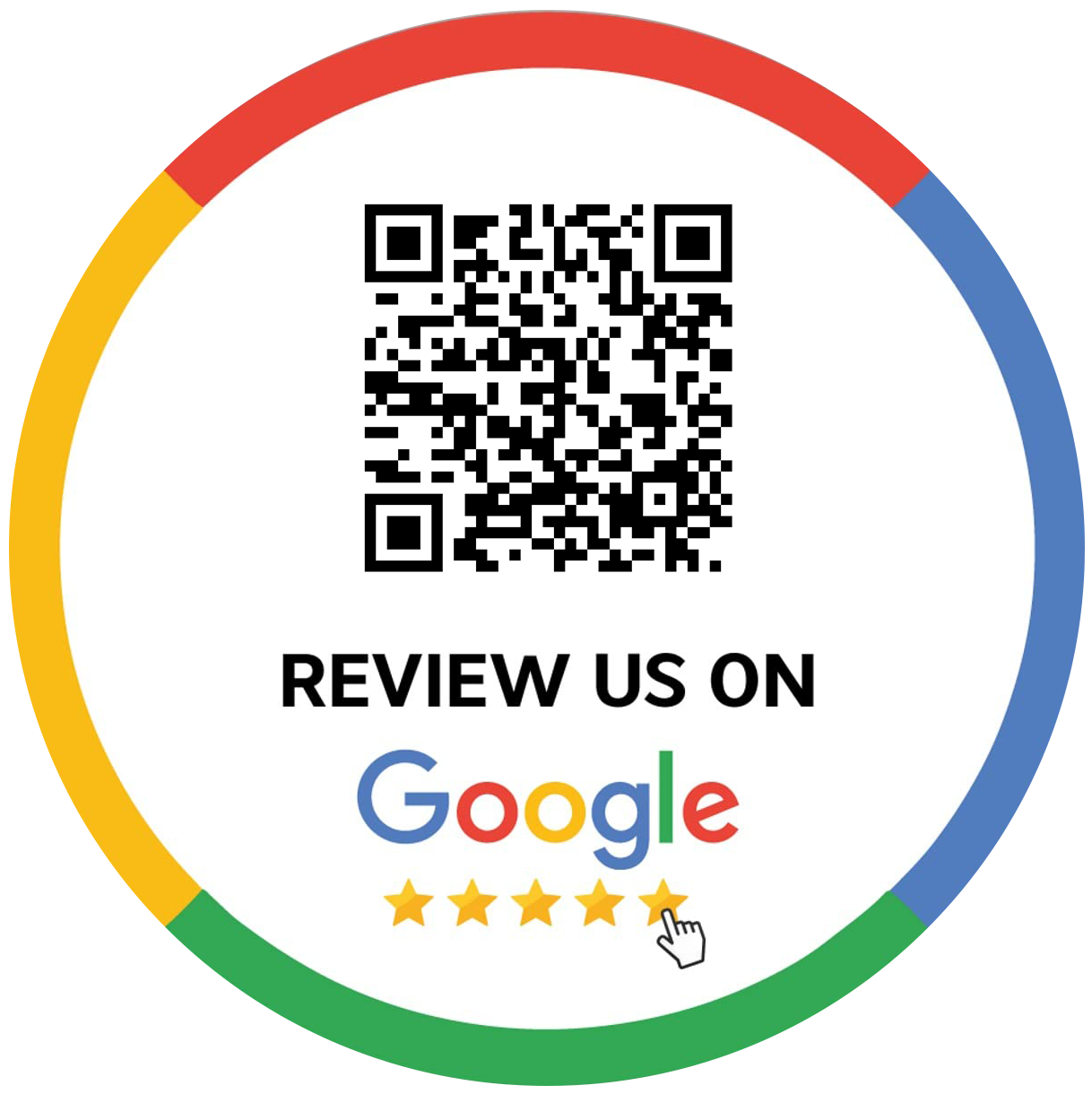
Your QR code should open the review composer, not just your profile.
Use Google’s “share review form” link or a Place ID-based URL. Free generators exist.
Put it on:
- Business cards (back side)
- Job folders and invoices
- Checkout signage
- Trucks and vehicle magnets
- Email signatures
If you implement one offline tactic from this entire guide, make it a direct-link QR card in the hands of frontline staff.
Getting Your Team Comfortable Asking
Most review strategies fail for one simple reason: nobody wants to ask.
Fix that with three things:
1. One sentence.
Write it down. Practice it. Normalize it.
“If today was helpful, would you mind leaving us an honest Google review?”
2. Give them something to hold. A small QR card or simple sign works.
QR card or signage. No explanation required.
3. A clear trigger.
After the receipt. After the compliment. After the “thank you.” No ambiguity.
If you want to go further:
Track reviews per employee. Role-play the ask in team meetings. Reward name mentions — not star ratings. Recognition reinforces behavior without encouraging filtering.
Track What Matters
- New reviews per month (velocity)
- Average rating + distribution
- % with written text (not just stars)
- Median response time
- Recurring themes (wait time, pricing, staff, communication)
These metrics reflect how consistently your team is asking, responding and improving.
Reviews compound when the process is consistent. Build the system. Keep it running.
Want To Level Up Your Marketing?
Get free access to our library of proven tools & strategies to grow your brand. Plus, stay ahead of the curve with expert tips—sign up for our Strategic Spark Newsletter today!